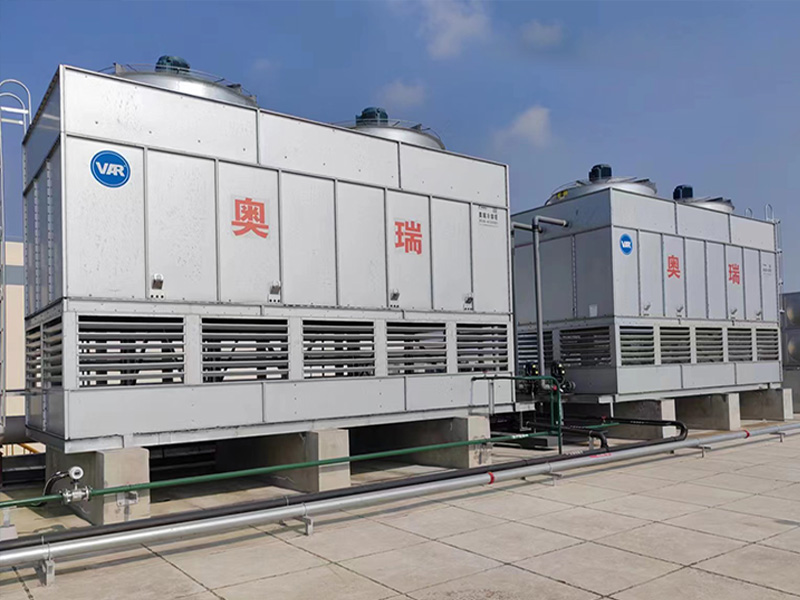
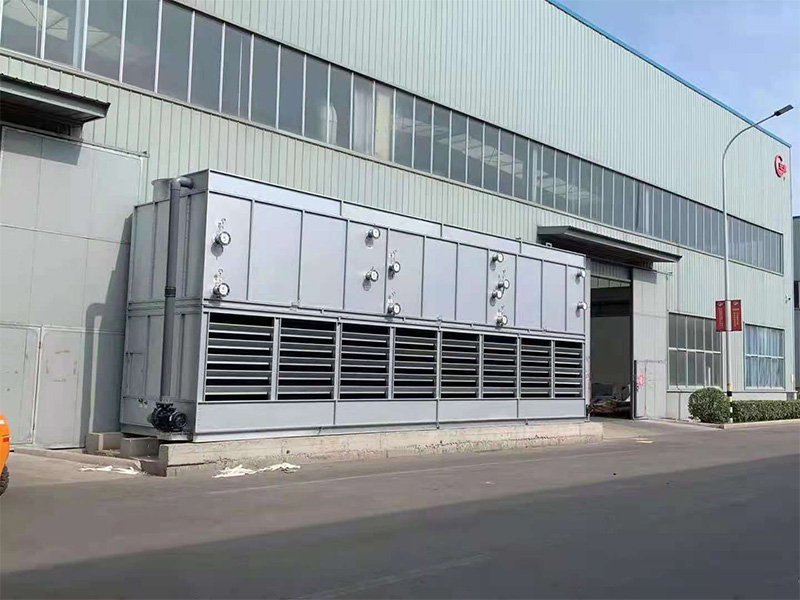
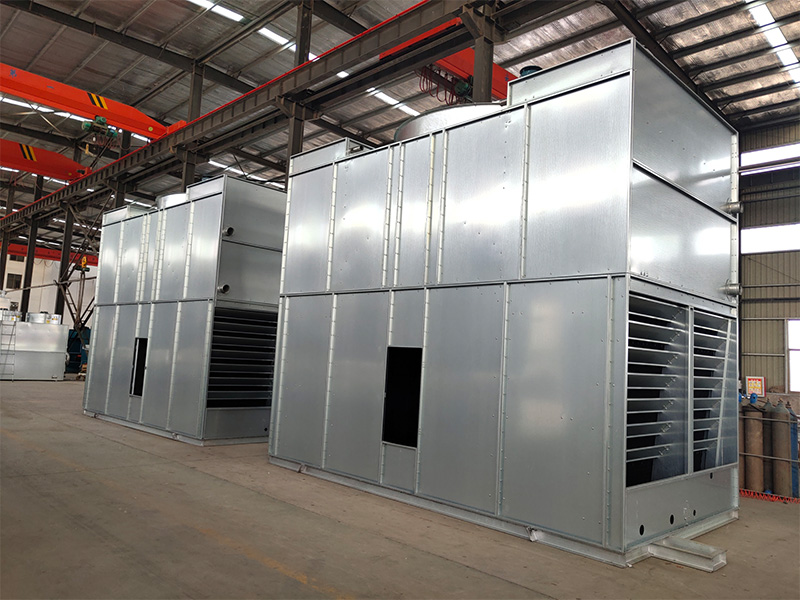
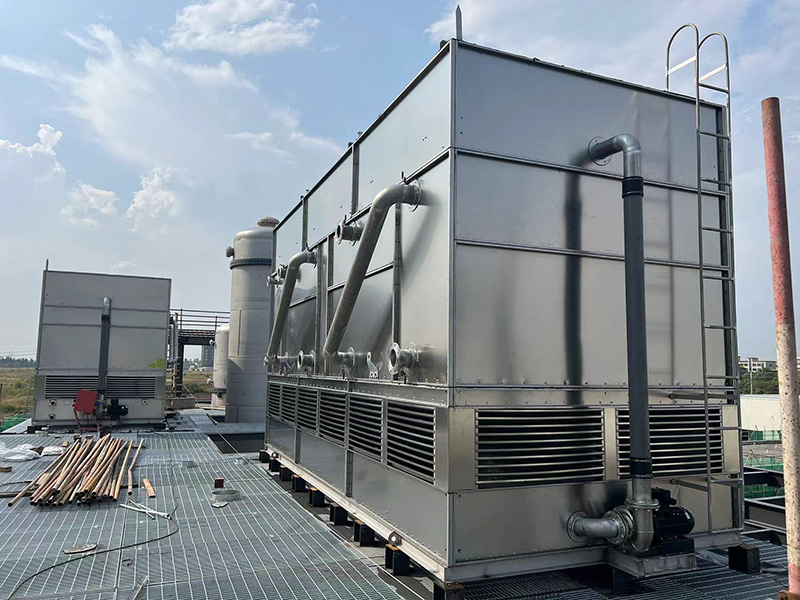
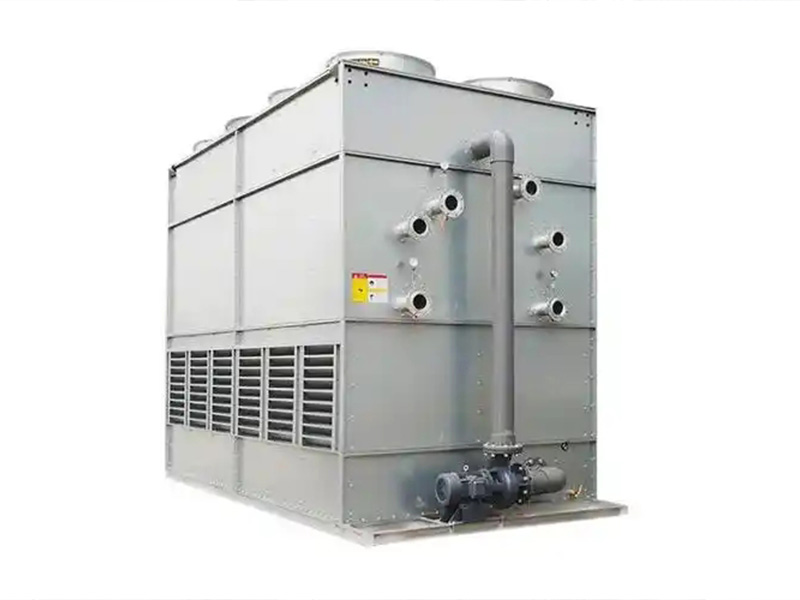
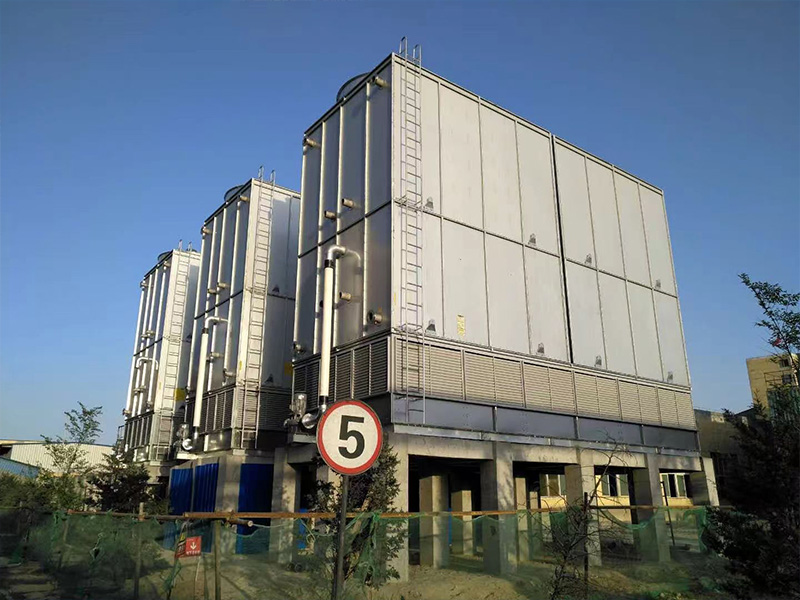
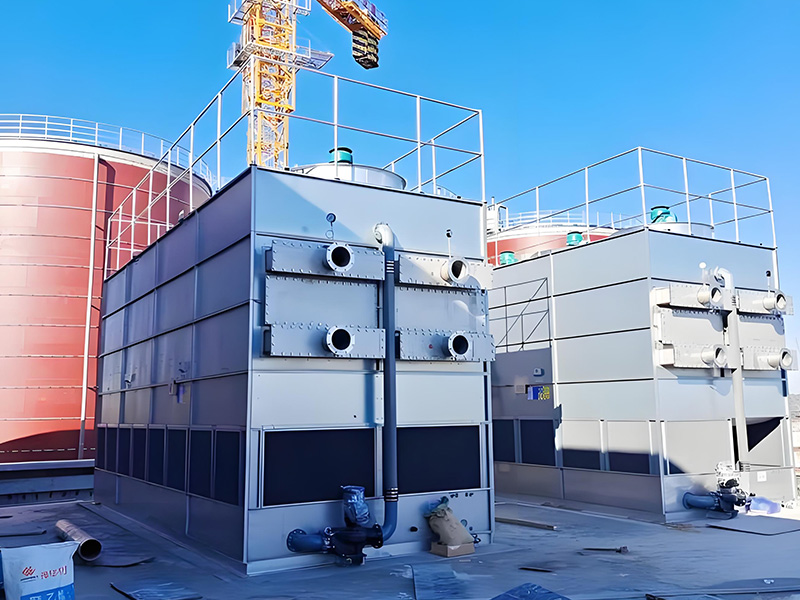
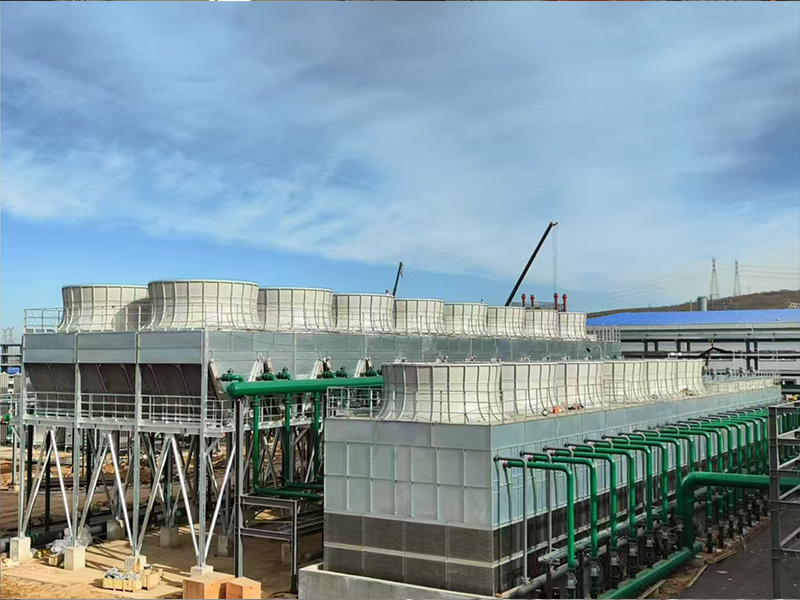
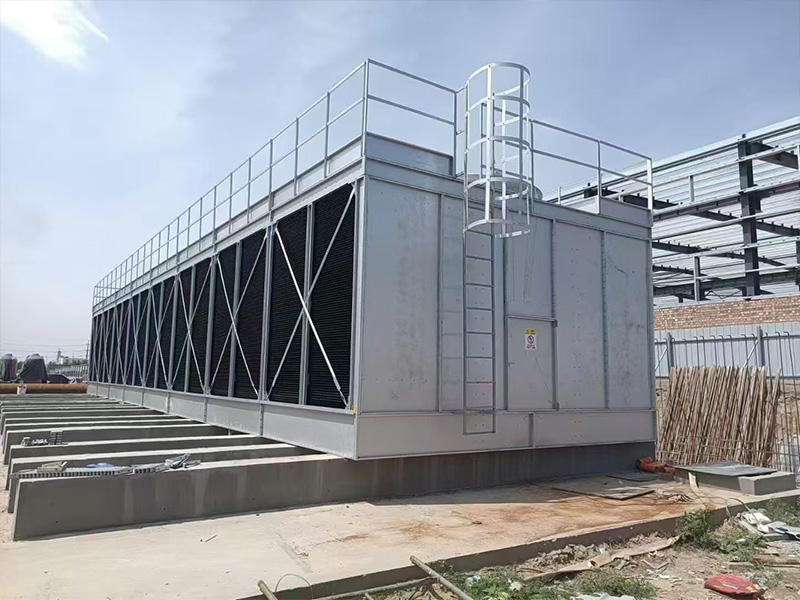
During the moisture absorption process, moist air serves as the main working medium and dry air acts as the carrier, with constant mass and mass flow rate. Originated from evaporative coolers, the closed-circuit cooling tower is essentially a heat exchanger that combines the performance of water-cooled coolers and conventional cooling towers. It features performance between water-cooled exchangers and air-cooled exchangers, so it is also referred to as an “evaporative air cooler” by some manufacturers.
The mass of water vapor in moist air changes continuously. Therefore, certain state parameters of moist air, such as enthalpy and specific heat capacity, are calculated based on the unit mass of dry air. When calculating the cooling capacity of closed-circuit cooling towers, theoretical data can reach standard values without considering the influence of ambient humidity on heat transfer. However, the actual cooling capacity will be insufficient in practical operation.
Insufficient cooling capacity is mainly caused by neglected ambient humidity. Humid ambient air contains excessive water vapor, which reduces heat and moisture absorption during the heat transfer process and ultimately lowers the overall cooling efficiency.
To select a matched cooling tower accurately, customers need to specify detailed parameters including the tower type, hourly water flow rate, and inlet & outlet water temperature. It is also required to clarify the cooled equipment type, whether an on-site circulating water tank is available, and the specific on-site installation conditions. If spare parts or auxiliary accessories are needed, relevant requirements shall be specified in advance.
In case of special working conditions or abnormal environments, please indicate the specific application scenarios and ambient conditions to ensure accurate model selection. During ordering, customers shall specify the required base type and tower model, and the equipment will be designed strictly in accordance with signed contracts and technical agreements.
In addition, the inlet water temperature must be confirmed to select standard, medium-temperature or high-temperature cooling towers. According to on-site operating conditions and noise requirements, cross-flow, counter-flow or compound-flow cooling towers are optional.
The cooling tower flow rate is determined based on the cooling capacity of chillers or refrigeration units. Generally, the rated flow of the cooling tower is higher than that of the supporting refrigeration equipment. For parallel installation of multiple units, cooling towers of the same type are recommended for consistent operating performance.
Working Principle of Closed-Circuit Cooling Towers
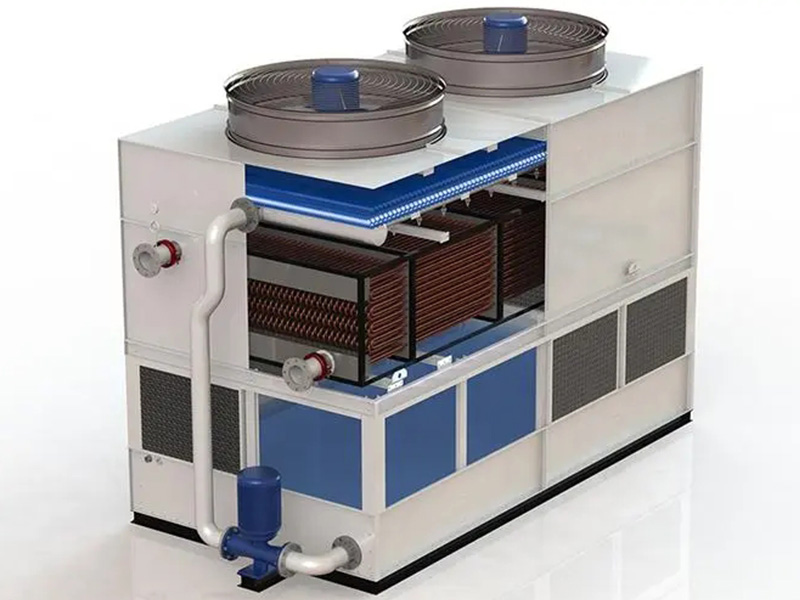
Closed-circuit cooling towers operate based on the principle of water evaporation heat absorption and indirect coolant heat exchange. Spray cooling water is stored in the bottom water tank of the tower, while the process fluid (softened water or other circulating liquid) circulates inside the closed cooling coils.
The spray water is pumped through the water distribution system and spray nozzles to evenly cover the outer surface of the cooling coils. Partial spray water evaporates and absorbs a large amount of heat, effectively reducing the temperature of the internal circulating process fluid.
The unevaporated spray water and humid hot air are blocked by baffles and flow through the PVC heat exchange filling layer. The water in the PVC filling layer achieves continuous cooling through persistent evaporation, then cools down and falls back to the bottom water tank.
The cooled water is recirculated by the water pump to the water distribution system for repeated spray cooling on the coils, forming a continuous and stable circulating cooling system.
 http://www.aoruikunlun.com 2025-03-19 10:50:02 点击数:


 Home
Home
 Products
 Tel
Tel